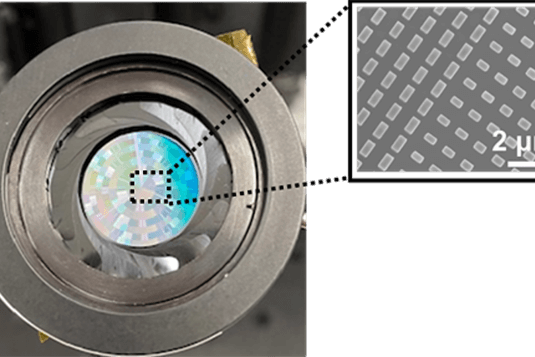
Advancing hardware-in-the-loop infrared testing with high-speed, high-resolution scene projection technologies designed for next-generation sensing systems.
IRSP: Infrared Scene Projection
Modern infrared systems operate in fast-changing environments that push the limits of traditional hardware-in-the-loop testing. Existing infrared scene projectors often lack the speed, resolution, and format size needed to accurately simulate dynamic environments for sensor evaluation in commercial aerospace, autonomous vehicle navigation, and low-earth orbit observation.
CFD Research is addressing these challenges through advanced infrared scene projection technologies that deliver high frame rates, high resolution imagery, and more realistic simulation environments. Designed to overcome the limitations of legacy systems, these capabilities provide the speed, scalability, and fidelity needed to evaluate next-generation sensors with greater confidence.
High-Speed Performance
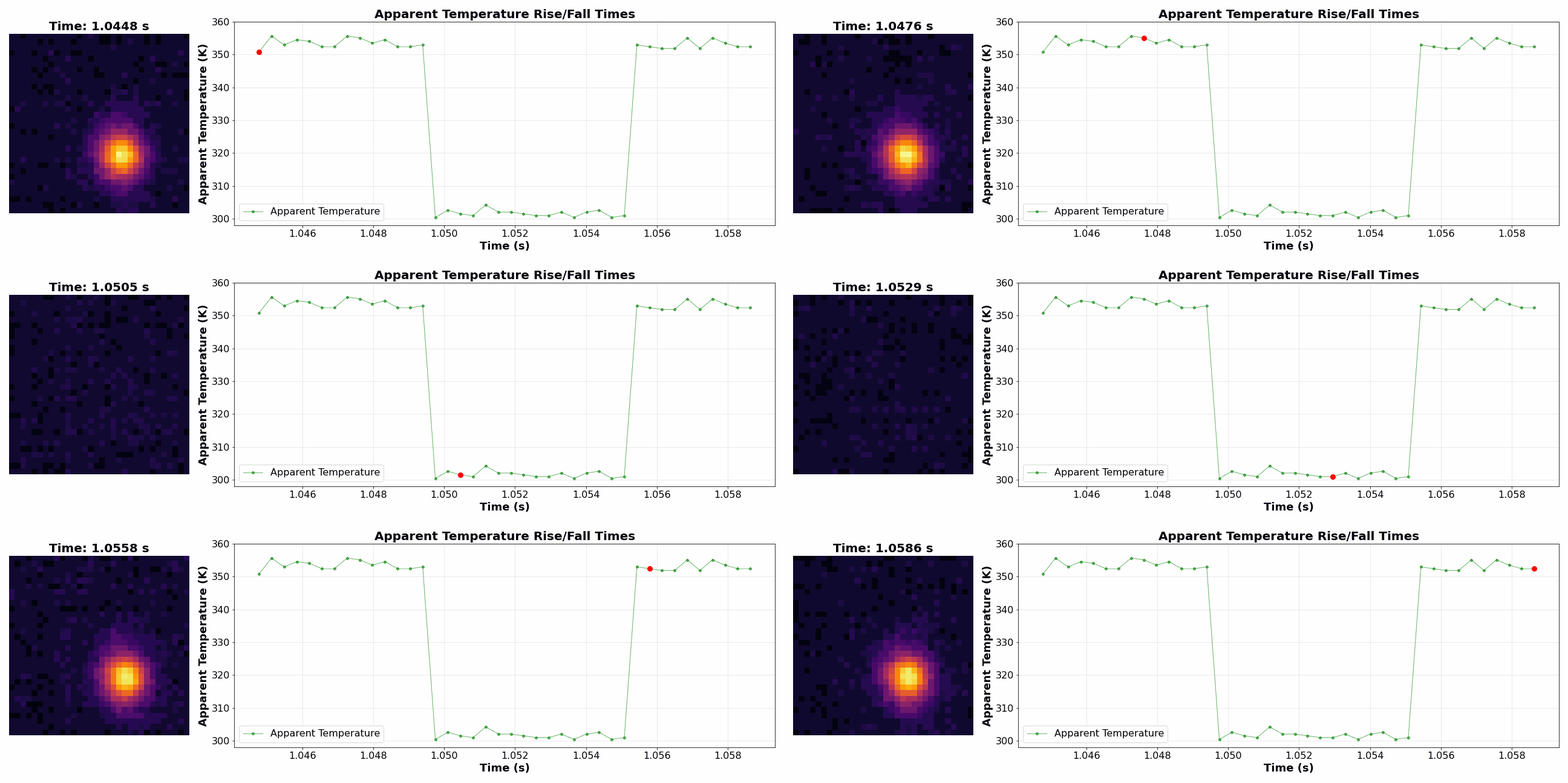
Maintain image fidelity during the most demanding test scenarios. By eliminating thermal gradients and pixel cross-talk, CFD Research’s photonic color-conversion technology preserves high contrast even during high-speed dynamic scenes. The system has demonstrated scene frame rates that are over 10 times faster than traditional infrared scene projectors, enabling more realistic simulations of rapidly changing environments.
High Resolution Imaging
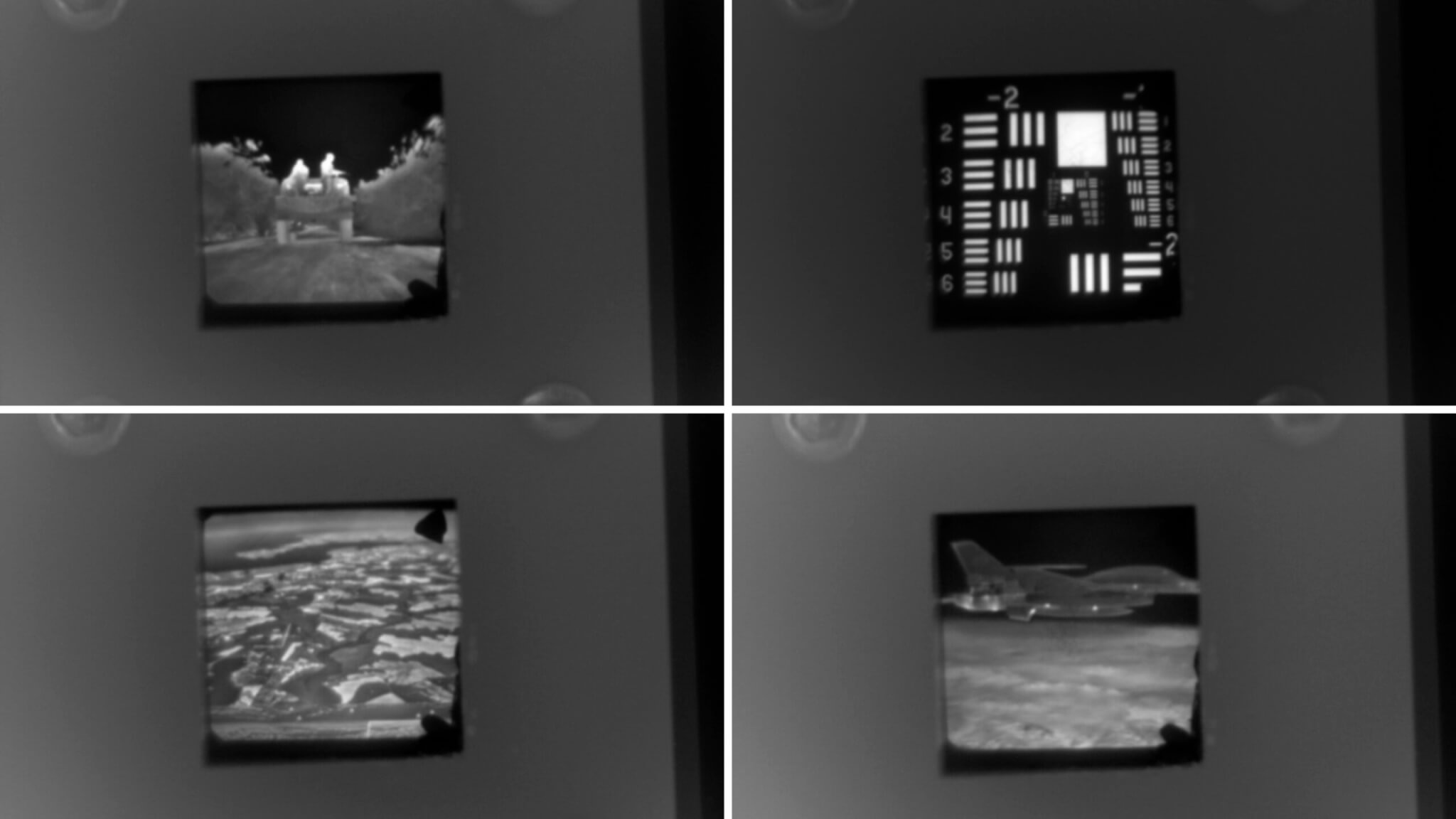
Image resolution is determined by the projection source rather than the photonic screen. When paired with a high-definition projection light engine, the system can support 4K-resolution hardware-in-the-loop simulations, enabling greater scene fidelity and target realism.
Rear-Illuminated Architecture
CFD Research has developed one of the first “Rear-Illuminated Color Conversion Screens for Infrared Scene Projection.” This rear-illuminated configuration provides seamless integration with commercial collimators. The result is a more flexible and efficient test setup for a wide range of sensor evaluation applications.
Scalable and Adaptable Design
The screen leverages traditional semiconductor deposition techniques to create continuous projection areas that can be significantly larger than array-based technologies. We can support custom screen sizes and shapes for oversized hardware-in-the-loop testing environments while maintaining consistent performance across the projection surface.
Rapid Manufacturing and Deployment
By utilizing established deposition processes and readily available materials, the technology simplifies manufacturing and reduces supply chain constraints. Designed for integration into existing hardware-in-the-loop test benches, systems can be deployed quickly, with manufacturing lead times as fast as a few weeks.